Current speaker range at Ohm-Audio bv
In our view, the speaker is the most important link in a Hifi or High End installation. Place 10 different speakers side by side, and they all sound completely different. The task of a speaker is simple. The speaker converts the electrical current from the amplifier into acoustic vibrations. Simple, right? Not quite. The speaker is an electro-acoustic converter, and that is the most difficult task there is in our Hifi world. Converting electrical alternating voltage into acoustic sound waves can be done in many ways, as it turns out.
Dynamic speakers
1-way speakers
2-way speakers
3, 4, 5 or more-way speakers
Horn speakers
Electrostatic speakers
Magnetostatic speakers
Ionic speakers
Ribbon speakers
phew....
These speaker systems are available in many types and sizes. Different cabinet materials such as wood, aluminum, stone, glass, plexiglass, MDF, paper, and so on. They are active or passive, sealed or have a bass reflex system or a transmission line, they are line arrays or not, they are tall, wide, long, deep, or not. You can't imagine it being any other way and it still exists. That is precisely why there is so much difference in sound among the different speakers.
Is there then not 1 principle and construction that is optimal and ideal? Unfortunately not. Every speaker construction is a compromise. The search should not be to find the perfect speaker, but to find that speaker that you like the most, and that fits best in your home, situation, and of course with your Hifi or High End set.
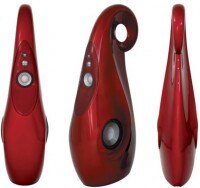
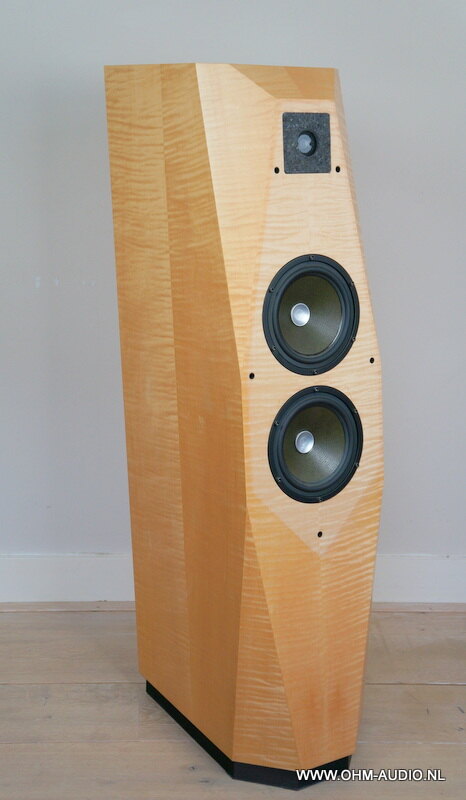
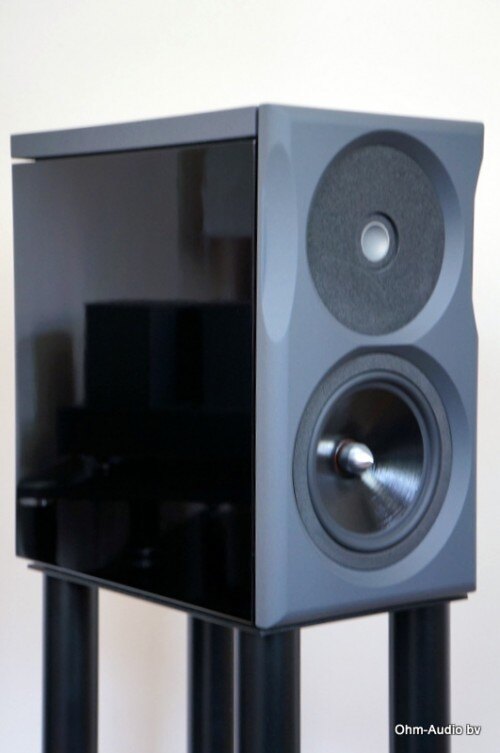
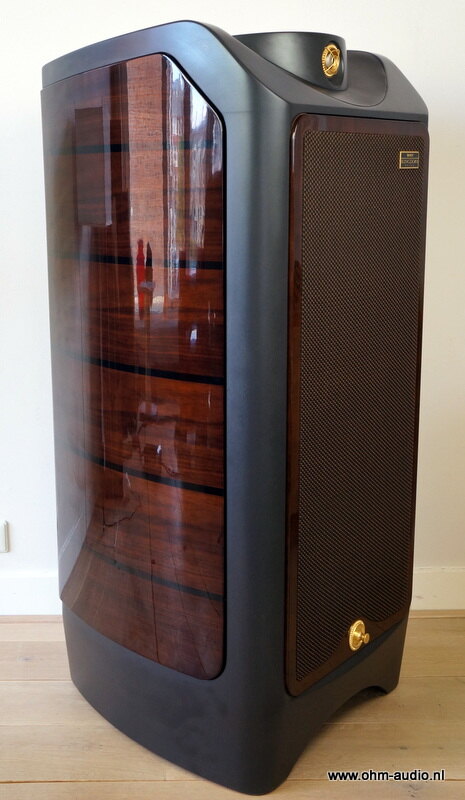
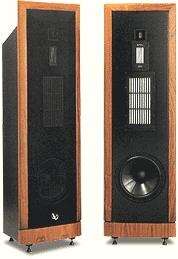
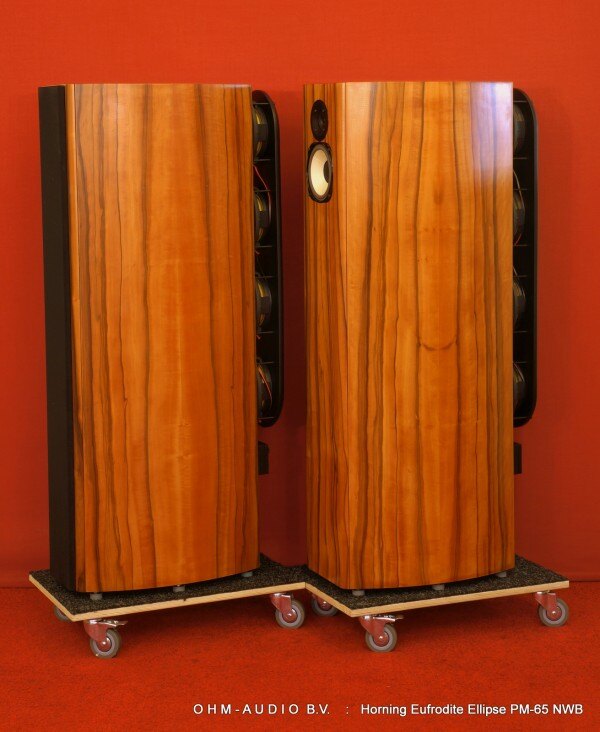
Ohm Audio bv evaluates the speakers that come in to us in several areas. We do this internally, for ourselves, to determine where and in which situation we can best position the speakers. That produces a certain score. Now it doesn't mean that the speaker with the most points is the best speaker for you. Perhaps some points are more important to you and others less so. Each component is examined, pardon, listened to for its various characteristics. This way we can help you choose the perfect speaker for you.
Frequency range:
We evaluate the speaker on its qualities in frequency response.
Sub bass: Below 30Hz. How is the sub bass? Heavy? Light? Fat? Lean? Not only the amount of sub bass is determining for the score, but certainly also its quality. But for someone who likes deep and heavy bass, this is an important point.
Bass: 30Hz - 80Hz. How is the bass? Tight? Is there doubling? Is there a resonance peak in the bass? Is this well damped? How is the distortion? This is important for everyone, because distorting and booming bass is good for no one.
Low midrange: 80Hz - 300Hz. Very important area with regard to the "drive" that a speaker has. How is the strength and quality of this area? Is it messy? Or clean? Does the speaker have power?
Midrange: 300Hz - 3000Hz. The most important area of the speaker. Also because our ears are most sensitive in this area. The human voice is also in this area, and many are very sensitive to the absolute qualities of a speaker in this area. It's not so much about strength but purely about the quality of this area.
Upper midrange: 3000Hz - 10000Hz. The important area adjoining the midrange. Important for transparency in the sound. Cymbals, high instruments, benefit from quality upper midrange reproduction. In this area it is determined whether a speaker sounds fresh or warm. Sharp or dull. Reserved or aggressive.
High: Above 10,000 Hz. Determining the detail and spatiality in a speaker's sound. How is the radiation? Does it sound airy?
We evaluate every speaker for its audiophile qualities. This is separate from the qualities of a speaker in the frequency range. Granted, they are the more "vague" concepts, but every audiophile knows exactly what is meant.
Soundstage: This is about the size of the soundstage, or the image. The larger the image, the better a concert hall orchestra is reproduced realistically. The smaller the image, the more suitable the speaker is for reproducing "small" music. Some speakers always sound very large, and that fits well with listeners who listen a lot to live and classical music for example, but less well with people who listen to small ensembles. It is best to choose a speaker that is honest, so it sounds grand when it should, and also small when necessary.
Imaging: Imaging is related to the soundstage. It refers to how pure and natural the soundstage is reproduced. Can the singers and musicians be localized? Or is it a vague blur? Does the sound from a musician come from one spot, or does it come from everywhere? The more accurate, the better, and thus more points. However, if you like a large, and perhaps somewhat vague beautiful music, don't worry about this. Just forget imaging.
Listenability: We consider this a very important property of a speaker. Can you listen to it comfortably? Or does the sound tire you out? Do you have to make an effort to listen relaxed, or are you right at "home"? Do you want to keep listening all night? Or do you think after an hour, or two, turn off that set? The better the listenability, the better the speaker in our opinion.
Spectacle and Fun: Also very important for most music lovers. Is there something to experience? Or does it sound boring? Does the sound sparkle? Or does everything come across very tamely? Are you on the edge of your seat? Or do you fall asleep regularly in the listening chair? We at Ohm-Audio BV think: also go for spectacle and fun. The more fun, the better. Of course, this is purely subjective.
Points can be earned here with the underlying technology and build quality of the speakers.
Drivability: What does the speaker do with a simple amplifier? Does it already play well? Or do you absolutely have to put a heavyweight with it? Does the speaker work well with tube amplifiers? The easier to drive, the better, because more different amplifiers can be used. But for absolute quality, this doesn't matter. Only we have concluded that the easier the drivability, the better and easier the music flows from it.
Build quality: This does not mean how heavy a speaker is, but how well it is built. If you stuff a bad speaker with concrete, it will be heavy too, but that doesn't make it a good speaker. How is the finish? Plastic veneer or real wood? Sprayed once roughly or several times nicely sprayed smooth and polished.
Extra: Here a speaker can earn extra points with specific construction qualities, or very special units that really add something special.
Here a speaker scores on the general, but often no less important, matters.
Sales & Service Channel: How is the sales channel? Directly from the factory? Or through active dealers? Who can repair the speaker in case of a defect? The broader and better the distribution, the more points can be earned.
Packaging: Important to get your speaker home without damage. Also important for resale. Without the correct and original packaging, shipping a speaker is a tricky business. A speaker is often large, heavy, and very easily damaged.
Manual: Does your speaker come with a manual that helps you get the best out of it? Or a simple A4 sheet with tips? Or nothing at all? The better the manual, the greater the chance that you get out of your speaker what the manufacturer put into it.
Value for money: This is not interesting for some. We believe that every speaker should justify its retail price. The acoustic end result plays a role, but also the build quality and technology.
Overall score General: 0 - 10 points
The average of the total scores: 0 - 10 points
As an example, let's take an excellent speaker built in the Netherlands
Sub bass: Calm, relaxed, not too loud, but well present. 6
Bass: Good. Calm and full bass reproduction. Little distortion. Not very dynamic. Missing some punch. But melodic. 7
Low midrange: Good. Not really powerful. A bit woolly. 7
Midrange: Excellent. Quality and dynamics very good. Distortion low. Special quality. 9
Upper midrange: Good. Transition to tweeter inaudible. Calm high tone reproduction. 7
High: Good. Slightly thinner compared to the very strong midrange. Cymbals beautiful. Silk Softdome tweeter of excellent quality.
Overall score Frequency range: 7.1
Soundstage: Good. Ample, but not so precise. Solid though. 7
Imaging: Good. Not very precise. Voices somewhat difficult to localize. Instrument size not very accurate. 7
Listenability: Sounds easy. No listening fatigue occurs. 8
Spectacle and Fun: Good. There is a lot to experience. Nice details. Good dynamics. 8
Drivability: Easy to drive, also with simple amplifiers. Suitable for tube and transistor. 8
Build quality: Simple but solid. Lightweight. Reasonably resonance-free. Suitable for banana plugs and spades. Cabinet reasonably finished. Front finish moderate and somewhat affects the signal. Serious listening requires front removal. 7
Extra: Special proprietary bass/midwoofer with excellent qualities. 9
Sales & Service Channel : 3 sales points distributed across the country. 7
Packaging : No packaging. Wrapped in foil. 4
Manual : No manual. Lots of information on the website. 6
Price-Quality Ratio : Lots of music for a very attractive price. Special audiophile qualities. 9
Overall Score General : 6.5
Excellent speaker with outstanding midrange and surprising bass reproduction. Beautiful appearance. Surprising full sound reproduction for the compact size. Does very special things in the midrange. Female-friendly. Very sharp offer in the speaker market.
This is how every speaker that comes in here is evaluated. Of course, this is subjective, and above all let your own taste prevail.
Ohm-Audio bv 2018-01