Build every Hifi and High End Audio system on the optimal foundation: The power connection
We see it happen often. Customers who keep swapping all sorts of expensive equipment (Devices and Cables). With one cable the sound is too warm, so they want to replace it with a brighter-sounding one. That does sound somewhat peppier afterwards, but then suddenly there's restlessness in the sound image. So they replace, for example, the speaker with a somewhat calmer-sounding model. But once installed at home, it turns out to sound a bit too dull. So they replace the power amplifier with one that has more life and dynamics, but then the high frequencies become restless. And so on. You can go on endlessly swapping speakers, power cables, interconnects and accessories. We at Ohm-Audio BV say: Stop! First get the foundation of your system in order, and only then start building with components and cables. That foundation, that's what we're going to discuss now: The power supply.
In theory, electricity is simply the 230 Volt connection for your lamps, refrigerator, microwave, phone charger, and so on, but it is also the connection that powers your Hi-Fi set. Electricity is electricity, most people would say, but unfortunately that is not the case. First of all, the power cables in your house often run through various interruptions (clamps in junction boxes for example) from the meter box to the outlet where you connect your audio set. These clamps cause increased inductance in the signal path, and thus a restricted power supply. And there are also moderate quality switches in the meter box. Additionally, we have many transmitters nearby: WiFi, 4G, 5G, DECT, smart meters, mobile phones and so on. These all produce radiation, and in principle every wire is also an antenna. These signals are picked up by all cables, including power cables, and this causes pollution in the 230 Volt network. A lamp or a microwave does not suffer from this, but an audio set, and also video equipment such as televisions, Blu-Ray players and projectors, do suffer from it. The picked-up signals and damage from the feed-through clamps enter your sensitive audio/video devices which make you hear and see this, in the form of unrest and lack of clarity. The soundstage is less 3D, there is less air around the performers and sounds are more merged together instead of being rendered individually in harmony with the rest. With video equipment such as a TV, the image is also restless and colors are rendered somewhat more artificially. That is why we recommend a good and pure power connection, and then high-quality power distribution. In terms of cost, it is many times more cost-effective to set up the power circuit properly than to constantly purchase new and different cables and components. Of course, setting up a good power circuit is not particularly cost-effective for a compact set worth a few hundred euros, but once you have a serious high-end audio set or a large 4K TV, then this is the most worthwhile investment you can make. The investment in the perfect basic power circuit costs around 1000 euros, and then there are still the costs of the person who installs it. A high-end power cable or interlink costs that too, but a complete power circuit will always do more than a single cable. Always install a power circuit then, if possible of course, because there are homes where this is not possible or not permitted by the landlord. In the latter case you do what you can, and this involves a high-quality power distributor/power conditioner or power strip with filtering and good cabling.
Power Input
Every house has a central power input. The place where the thick power cable from Enexis enters your house or apartment. Some houses have a single-phase circuit, and some houses have a more extensive three-phase circuit. The single-phase circuit is sufficient for small households that do not have heavy electrical equipment. The three-phase circuit is the power circuit, and is intended for households that need a lot of power, such as a cooktop, heavy oven or an EV charging point.
Somewhere in your home, the Hi-Fi or High End audio installation is connected to the power supply. It is important that this connection is realized as well as possible, so it is strong enough, and is not interrupted by all kinds of clamps and splice points.
We look at the following power components in logical order:
Earth leakage circuit breaker > Main circuit breaker > Installation cable > Wall outlet > Power distribution with filtering/noise suppression.
This is the basis of every Hi-Fi and High End setup. Later we will also look at the Power cords themselves, the cables that run to the devices to power them.
Single Phase or Three Phase
The single phase cable is a thick cable containing 3 wires. The colors of these wires are brown/black, blue and yellow. The first wire is the brown or black wire, and that is the phase wire and it carries the 230 volt current inward. You must never touch this wire, as you will get a huge shock. The second wire is the blue wire, and that is the neutral wire. There is no current on it. The current flows via a connected electrical device from the phase (brown) to the neutral (blue) and that is how electrical devices work. There is also a third wire and that is the yellow wire. The yellow wire is the earth connection. This yellow wire is directly connected to the earth stake that most modern homes has driven into the ground.
The three phase cable is a thicker cable with 5 wires. The blue wire (neutral) and the earth wire (yellow) are the same as with the single phase connection. The difference is in the phase wire, because there is not 1, but there are 3. Each wire supplies 230 volts, but these three 230 volt wires have a shifted phase (you can forget about that again). By means of this shifted phase, the 3 wires together make 400 volts. That is why it is often called a 400 volt connection, but it is actually a 3 × 230 volt connection, intended to be able to deliver more current. Each of these phase wires is therefore a regular 230 volt wire, and each phase can be used for your audio power circuit.
The thick power cable (single phase or three phase) emerges from the ground, in the meter cabinet. In the meter cabinet, the thick power cable from Enexis first goes through the main circuit breaker. You can turn off this main circuit breaker when work needs to be done on the distribution cabinet. After the main circuit breaker, the thick power cable runs through the power meter (usually a smart meter). This measures the energy consumed, to settle this with the user. The thick cable then continues upward to the distribution cabinet.
The earth leakage circuit breaker
First, the single-phase wire or three-phase wire passes through a residual current device (RCD). The RCD is located in the electrical distribution cabinet and is a pure safety switch that prevents people from receiving a shock if they accidentally touch a live wire. This RCD measures the potential difference between the current wire (brown) and the earth (yellow) relative to the neutral (blue), and "detects" if current is leaking, then switches off the power at lightning speed. The RCD has nothing to do with overload, but is purely for the safety of people. After the RCD, the current flows to the power distribution. This distribution cabinet divides the current among the various circuits in the house. For example: Bathroom, kitchen, living room, study, bedroom and so on. Each zone in the house has its own circuit breaker. These switches are for technical safety. In case of overload, such a switch cuts off the zone that has a problem, for example a short circuit. Standard in the meter cabinet is a cheap and simple RCD. It does its job fine, but also disrupts the current. What comes out is just slightly lower quality than what goes in, in other words, such a cheap RCD affects the signal. There is a better solution and that is the HiFi-Tuning Supreme³ RCCB audiophile RCD, the best-sounding RCD we know of. Not cheap, but worth every cent. There are audiophiles who bypass the entire RCD construction. They tap the power before the RCD and bypass the RCD completely. In this case, you won't suffer from a poor-quality RCD, and you don't need to install a HiFi-Tuning Supreme³ RCCB RCD. However, this is officially not permitted, and moreover, you will then have no residual current protection for your audio system. If, for example, a child were to put a paperclip behind the electrical distribution box, or a live wire comes loose in a device, that could have disastrous consequences.
Short circuit and overload
What happens in case of a short circuit or overload? Suppose we have a 16 Ampere circuit breaker or switch in our meter cabinet. Such a switch can then deliver 16A × 230V = 3680 Watt (Watt = Volt x Ampère). The lower the resistance of a device, the more current flows. But with a short circuit, the resistance is nearly zero or close to zero Ohm. The circuit would then demand 10,000 Watts or more, which is not possible, and the wires would become very hot, even catch fire. The same happens if you demand too much power from a circuit, for example connecting and switching on 4 heaters of 2,000 Watts to 1 circuit. To prevent overload or fire, the switch trips, or the fuse melts, and interrupts the circuit. The entire circuit is without power. You will first need to find and solve the cause, otherwise the switch will trip again immediately. But first remove the 4 heaters from the power supply.
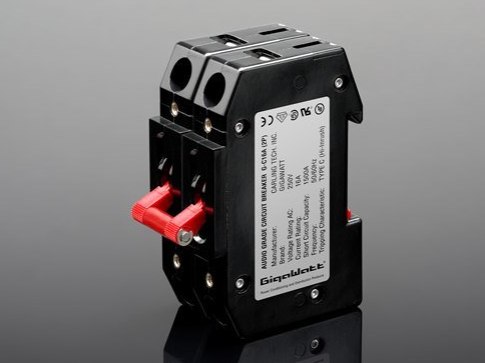
The overload switch: Fuse or Circuit breaker? In most modern homes, circuit breakers are used. You can simply switch them back on after a short circuit or overload without replacing a fuse. In some older homes, you'll still find meltable fuses. Both fuses and circuit breakers have their own characteristics and function. A standard meter cabinet usually contains cheap standard circuit breakers. These have a simple wire conductor and a breaker (contact point) that switches off when current demand is too high. You switch it back on and if there's no short circuit, it stays on. These circuit breakers have moderate conduction quality; they only meet short circuit requirements. We have a better option: the ultimate Gigawatt G-16A 2P switch, an audiophile-grade switch. Some modern homes also have an audiophile switch, such as one from Klankmoduul. That's not a switch, but a device with a fuse (phase wire) and an iron rod (neutral wire). Now the fuse is a problem. Look inside a fuse, break one open. You'll see, even in expensive audiophile fuses, a minuscule thin wire, just a few centimeters long and often not even 0.1 mm² thick. All current flows through that wire. The more current flowing through it, the greater the resistance, and thus the hotter the wire becomes. When more watts are demanded than the wire can handle, it gets so hot that it melts. Once melted, the current is cut off and you'll need to replace the fuse. The problem with the minuscule wire is the high resistance. We find these fuses unsuitable for a circuit. Audiophile power cables are often thick, 2.5mm², 4mm² or thicker, and what's at the very beginning... is a melt wire of 0.1mm² or thinner. You hear that in the sound, and that shouldn't be there. There you are with your nice thick power cables. An audiophile circuit breaker is really a lot better, and you hear it immediately. The Gigawatt switch Gigawatt G-16A 2P is the best solution we know of. This audiophile switch has 2 separate conductors, neatly separated from each other. Each conductor has a conductor thickness of at least 4 mm². The breaker is an OFC copper surface of about 30mm². This OFC copper contact is subsequently polished and silver-plated. The polishing ensures that the contact points press together perfectly. 1 degree skew, and the contact is already suboptimal. The silver plating ensures that the contacts remain perfect. Silver doesn't rust, but it can oxidize. Fortunately, silver oxide is an even better conductor than silver itself, so theoretically the switch keeps improving.
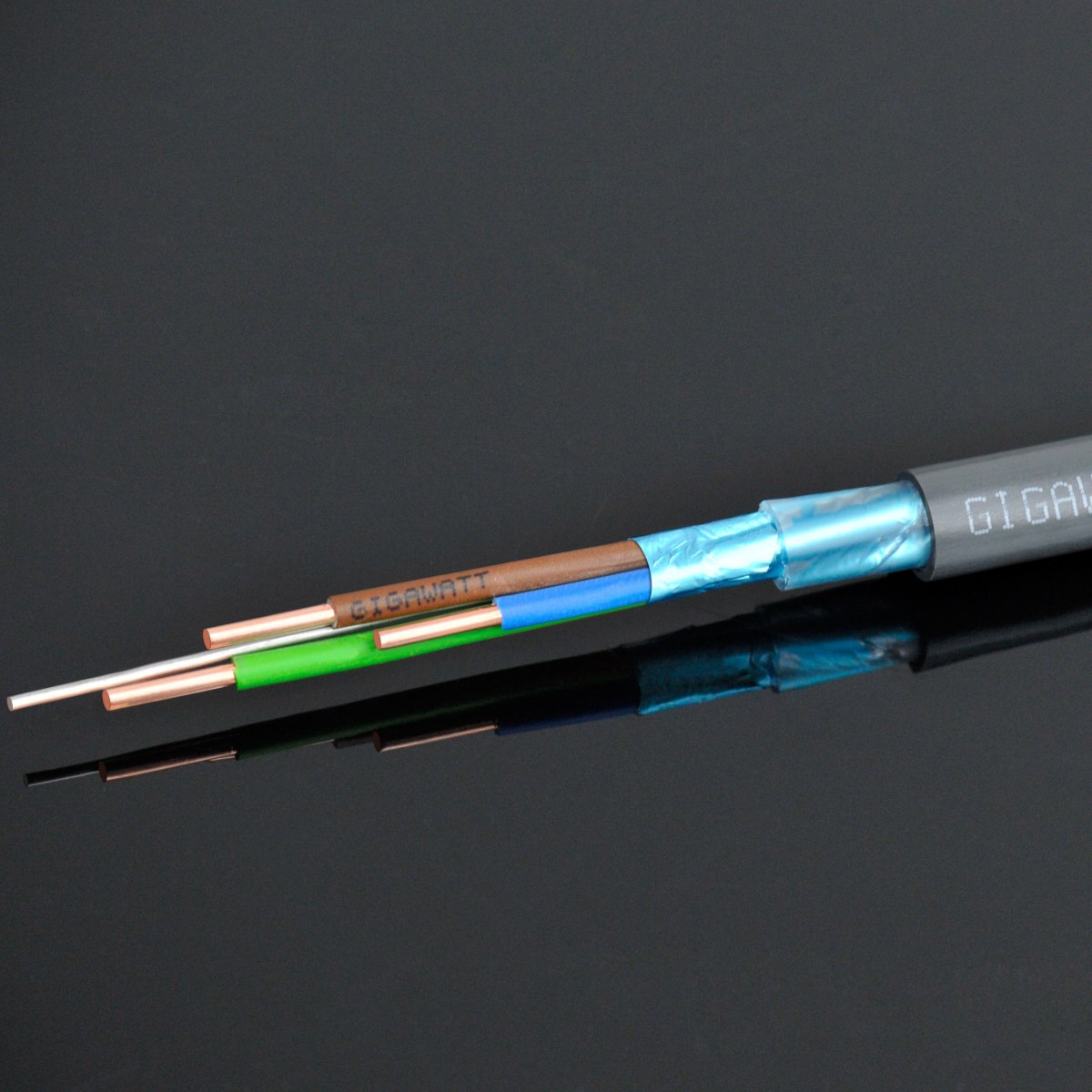
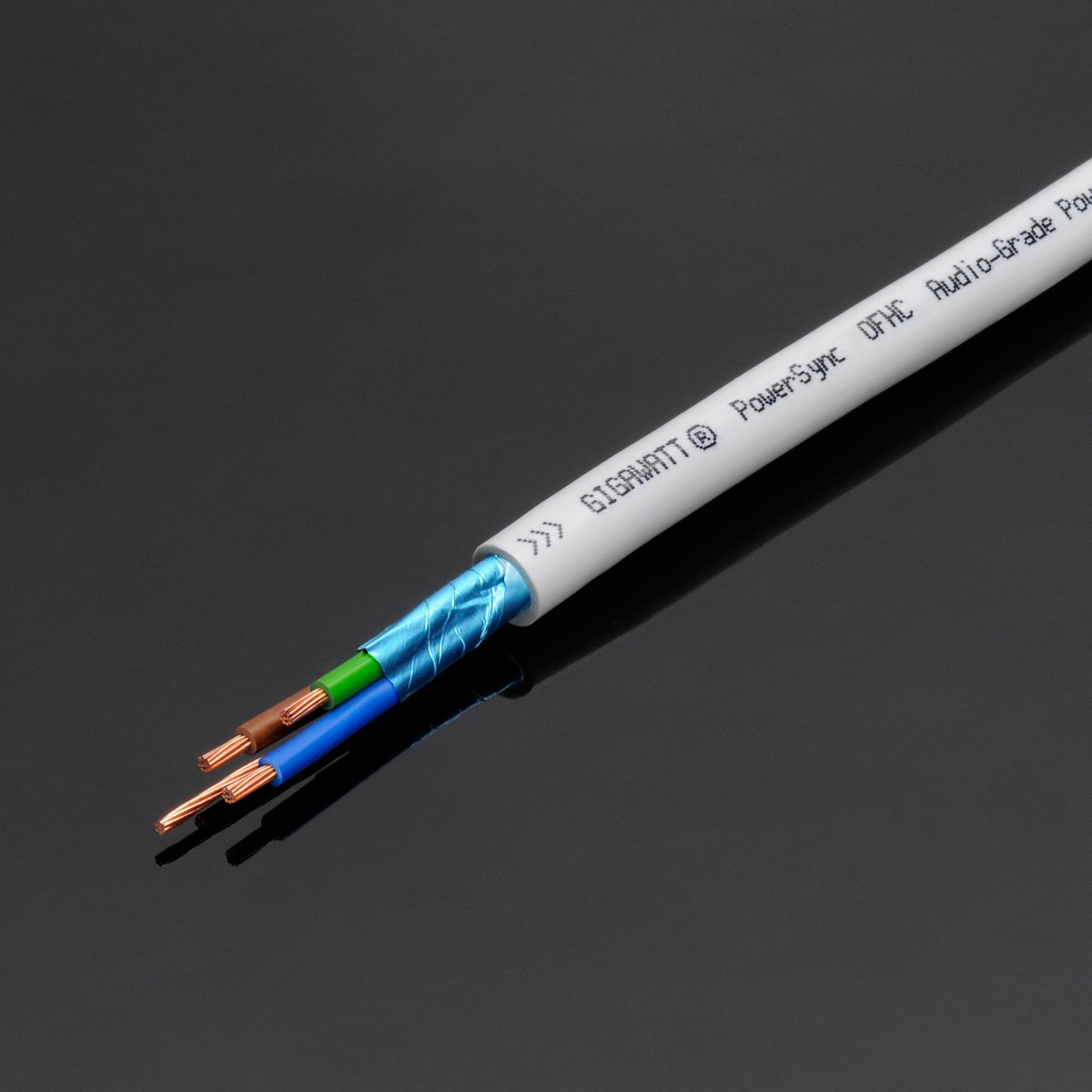
If all is well, we now have power conditioning suitable for a serious Hi-Fi and Ultra High End audio system in the meter cabinet. Alongside the standard technical RCD and a whole row of standard switches, there now proudly sits a Gigawatt G-16A 2P audiophile switch and a dedicated Hi-Fi-Tuning Audiophile RCD. Now the cable must be run from the meter cabinet to the audio system. For that we have 2 solutions. We have the best cable in the world, the Gigawatt LC-Y Evo installation cable, shown on the left of the image. This cable is technically superior to all other cables. Solid core OFC copper of 3 × 4mm², vibration damping, foil shielding, and an extra earth wire for the foil shielding. However, this cable is very stiff. No problem for straight conduits, under the floor (the cable can be in water), or easy bends, but with a 90 degree bend, you won't pull it through. In that case we recommend the Gigawatt Powersync power cable. This cable is semi solid core, so the wires are twisted. Not with 1000 mini-wires, but with 7 wires per conductor, 2mm² total per conductor, plus the same shielding and extra earth wire. The Gigawatt LC-Y Evo cable sounds super stable, transparent, fast and dynamic, and the PowerSync cable sounds largely the same, just a bit more relaxed. It's a matter of taste and application possibilities.
Connecting the power cable in the meter cabinet
It is important to note that both cables have a direction. This is related to how the power wires are drawn. Furthermore, the connection to the meter cabinet is different from the connection on the outlet side. In the meter cabinet you connect the phase (brown) and neutral (blue), and also the earth wire (yellow) with the insulated extra earth wire. The insulated earth wire makes contact with the shielding foil along the entire length of the cable. The entire shielding is thus connected to earth and works optimally. On the other side, at the wall outlet, you connect everything the same way, except the unshielded earth wire. Cut that off. If you don't do that, potential differences can arise, because the earth then runs over the earth wire (yellow) but also over the shielding foil. That can cause hum, so cut off the extra earth wire (uninsulated).
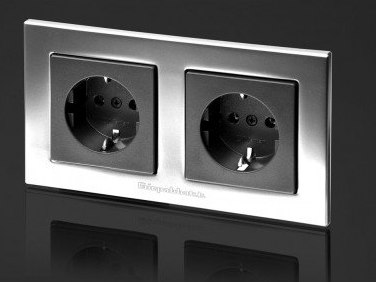
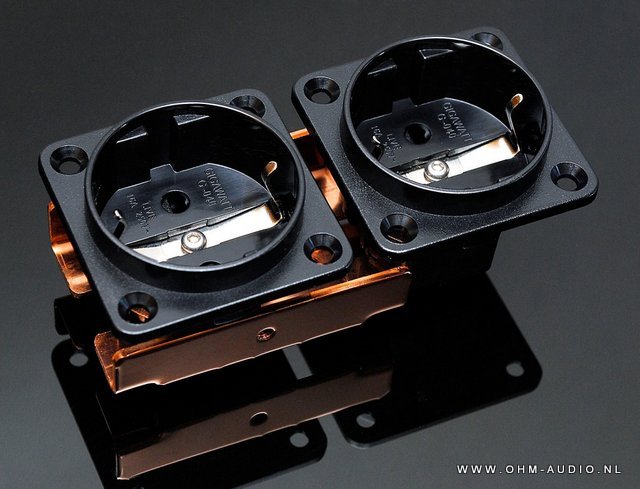
So you have laid the power cable from the meter box to your system. Of course, this must be connected to an outlet, the wall socket. Gigwatt also supplies this. The Gigawatt G-044 wall socket, made by Merten for Gigawatt. And Gigawatt has subsequently demagnetized it to reduce induction during signal transfer. This wall socket has a double 6mm² connection per wire. So you can feed in the power and optionally pass it through to a second socket. As a rule, 1 x Gigawatt G-044 socket is sufficient. Our advice is to connect all your equipment, including the power amplifiers, to 1 circuit. So not the sources to outlet 1, and the power amps to outlets 2 and 3. No, everything on 1 circuit. That sounds best. The absolute condition is that you use a top quality power distribution device from Gigawatt, Axxess or Ansuz Acoustics, or perhaps another good brand, and also connect this power distributor with the best and most powerful power cord you have in your home. If the power distributor is of poor quality, or the supply power cable is not good enough, you will hear that back.